


Many industrial equipment manufacturers, automation device developers, and mechanical assembly engineers constantly face recurring headaches when selecting drive motors. Unstable speed control, rapid heat generation, short service life, high energy consumption, and frequent maintenance failures all directly cut production efficiency and raise unexpected operating expenses. Most buyers only focus on surface parameters such as voltage and power, ignoring core structural advantages, matching adaptability, and actual working durability, which leads to frequent motor replacements and unnecessary downtime losses. Choosing a reliable brushless DC motor can thoroughly solve these hidden industrial pain points from the source, avoiding repeated debugging and frequent part replacement in subsequent use.
Unlike traditional brushed motors that rely on mechanical contact commutation, high-quality brushless DC motors abandon vulnerable carbon brush structures fundamentally. Brushed motors inevitably suffer brush wear, spark interference, electromagnetic noise, and contact resistance rise after long continuous operation. These hidden faults are not obvious in short-time testing, but will gradually worsen under 24-hour continuous operation, affecting precision control accuracy and even causing sudden equipment shutdown. Professional motor suppliers optimize internal winding processes and magnetic circuit designs to greatly reduce friction loss and electromagnetic interference, ensuring stable output under high-frequency start-stop and long-time heavy-load operation.
Shenzhen Jixiang Motor has accumulated rich practical manufacturing and application experience in the field of micro and special brushless motors for many years. It targets harsh working conditions including high temperature, dust, vibration, frequent switching, and low-speed high torque, customizes motor parameter matching schemes for different machinery scenarios. The actual operation feedback from a large number of downstream customers proves that properly matched brushless motors can reduce overall equipment failure rates by more than 70% compared with ordinary generic motors. Most users overlook environmental adaptability matching, blindly selecting universal motors, which results in accelerated aging and premature damage in special working environments.
Energy efficiency difference is another deep-seated problem easily ignored by ordinary purchasers. Brushed motors have obvious extra energy loss caused by brush friction and contact voltage drop, leading to higher power consumption under the same output torque. High-efficiency brushless DC motors adopt low-resistance copper winding, optimized stator and rotor magnetic structure, and low-loss bearing configuration. Under identical load conditions, the overall power saving rate reaches a prominent level, which continuously reduces enterprise electricity expenditure throughout the whole service cycle. Long-term mass operation amplifies energy cost advantages significantly, far exceeding the initial price gap between ordinary motors and high-performance motors.
Precision control stability directly determines the finished product quality of automation equipment. Low-quality brushless motors have lagging speed response, large speed fluctuation, inaccurate position feedback, and unstable torque output. These problems cause defective finished products, inaccurate positioning, and unstable operation of automated production lines. Premium brushless DC motors support precise closed-loop speed regulation, constant torque output, quick response start and stop, and ultra-low speed fluctuation, adapting to precision instruments, intelligent machinery, medical equipment, automatic conveying systems and other high-precision application scenarios. Stable performance avoids quality fluctuations caused by motor operation errors and improves overall competitiveness of finished mechanical products.
Core Performance Comparison Between Standard BLDC Motors & High-Quality Industrial BLDC Motors
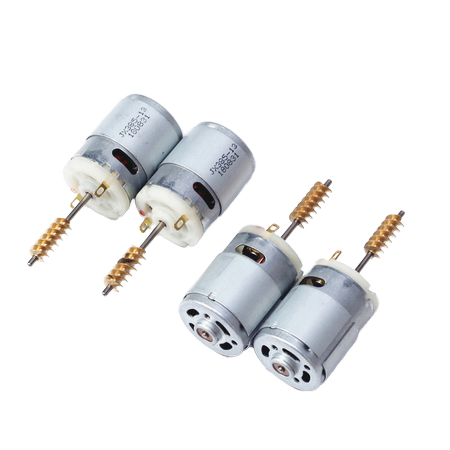
| Performance Indicator | Ordinary Generic Brushless Motor | High-Performance Industrial Brushless DC Motor |
|---|---|---|
| Continuous Working Duration | 8–12 hours daily, easy overheating damage | 24-hour non-stop stable operation |
| Service Life Span | 1000–3000 hours | 8000–15000+ hours |
| Working Noise Level | High noise, obvious vibration | Low noise, smooth stable operation |
| Temperature Rise During Operation | Rapid temperature rise, poor heat dissipation | Low temperature rise, efficient heat dissipation structure |
| Torque Stability | Large fluctuation under variable load | Constant torque, strong overload resistance |
| Electromagnetic Interference | Strong interference, affecting peripheral circuits | Low EMI, compliant with industrial electromagnetic standards |
| Maintenance Frequency | Regular parts inspection and replacement required | Almost maintenance-free for long-term use |
Most users only judge motor quality by appearance size and nominal parameters, but actual rated load, peak torque, insulation grade, bearing precision, and winding insulation durability decide real service performance. Many low-cost motors use nominal parameters exaggerated beyond actual bearable range, causing overload damage once working conditions change slightly. Authentic high-standard motors mark full-load continuous parameters truthfully, matching actual mechanical load without virtual parameters, ensuring safe operation under rated and instantaneous overload conditions.
Application scenario matching also determines whether a motor can exert optimal performance. Brushless DC motors are widely applied in intelligent logistics equipment, small intelligent machinery, medical auxiliary devices, intelligent household machinery, automotive peripheral accessories, and industrial miniature automation equipment. Different scenarios require distinct voltage specifications, shaft diameter sizes, installation modes, speed ranges, and drive matching schemes. Random selection without scenario analysis easily causes insufficient power, excessive power waste, incompatible installation, and mismatched drive control systems.
Long-term comprehensive cost calculation reflects the true value of high-quality motors. Although low-price motors have lower upfront purchase cost, frequent maintenance, short replacement cycle, high power consumption, and production downtime losses greatly increase total cost. Durable, high-efficiency, low-failure professional motors reduce subsequent maintenance labor costs, spare parts costs, shutdown losses and electricity costs comprehensively. From the whole life cycle of equipment operation, high-quality brushless motors bring far higher economic benefits than cheap inferior products.
Reliable motor quality also protects supporting mechanical structures. Unstable motor rotation generates periodic vibration impact, accelerating wear of gears, bearings, connectors and transmission parts of the whole equipment. Stable and smooth-running brushless motors reduce mechanical impact damage, extend service life of complete machinery, and reduce overall wear loss of the whole production system. This indirect value is rarely noticed by buyers, but plays a key role in long-term stable operation of industrial equipment.
In summary, selecting suitable brushless DC motors needs comprehensive consideration of structural advantages, energy efficiency level, control precision, environmental adaptability, service life and whole-life operating cost. Avoid superficial parameter comparison and low-price preference, choose professionally manufactured, scene-matched high-performance motors, fundamentally solve common faults and hidden long-term risks in motor operation, and achieve stable, efficient and low-cost continuous operation of mechanical equipment.